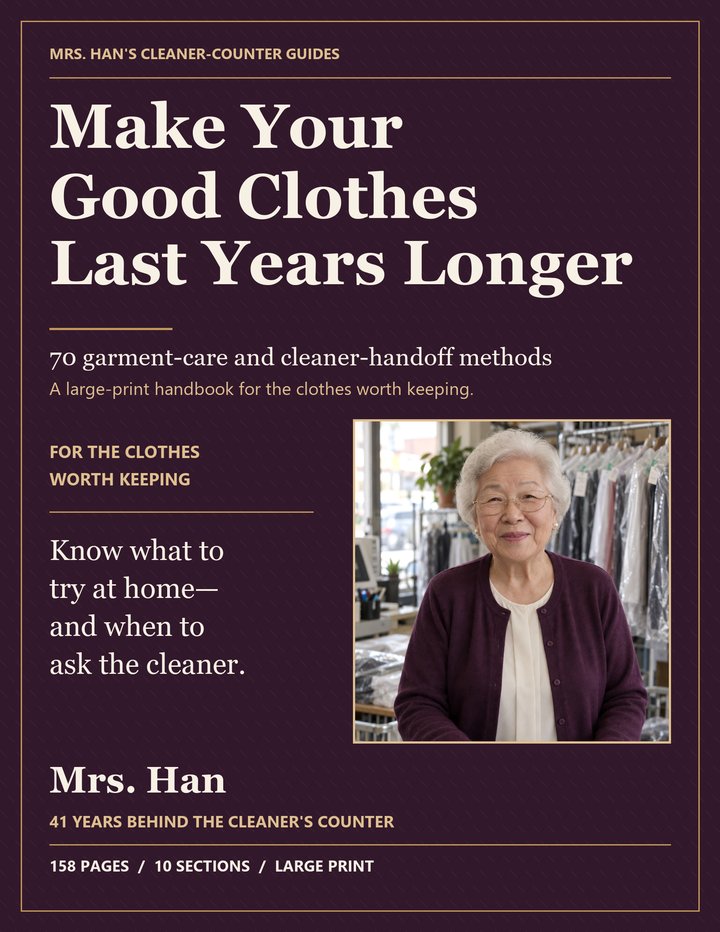
You may be unsure whether a good garment needs home care, a cleaner, or a careful hold aside. This book gives you 70 methods for inspecting it, choosing a lower-risk care path, and making a clear cleaner handoff.
Plus 3 separate bonus books.Including The Stain Story Card Book.
One digital bundle. PDF to read or print, plus EPUB for e-readers.
158Pagesin the main book
10Chaptersread in any order
3Bonus booksall included
Instant downloadPDF + EPUB for any device or e-reader
14daysRead-It-First Guarantee14 days, every dollar back
01 · How it helps
For the moments when good clothes need a second look
Start with the garment in your hands. Choose the methods that fit the question in front of you.
1Before you wash
My label says dry clean. Can I still wash it at home?
✓Keep “Dry Clean” Separate From “Dry Clean Only”: plain “Dryclean” with no washing method confirms dry cleaning, but home washing is not yet established. Chapter 02
What should never go in the same load as my fine knits?
✓Keep Towels, Denim, Hook-and-Loop Tape, and Rough Fasteners Away From Fine Fabrics: move them to a separate pile before the drum turns. Chapter 03
2Wearing and hanging up
Should I put on lotion before or after my good clothes?
✓Let Lotions, Deodorant, and Hair Products Dry Before Dressing: apply them first, then wait until the area no longer looks wet or feels tacky. Chapter 04
How do I pick the right hanger for a good jacket?
✓Match Hanger Width to the Garment's Shoulder Width: the hanger's ends should sit where the shoulders turn down, with no dents or forced line. Chapter 04
3Drying and storing
How do I stop a washed sweater from drying out of shape?
✓Reshape Knits to Their Original Measurements Before Drying: measure the knit before washing, then guide it back to those points without hard pulling. Chapter 05
When should I check on clothes I have packed away?
✓Schedule a Mid-Season Check for Moisture, Odor, Marks, and Pests: set a reminder near the midpoint between your put-away date and expected return. Chapter 09
4At the cleaner's counter
What should I tell the cleaner about a stain?
✓State What Happened, When It Happened, and What You Already Tried: point to the mark and ask for those facts on the ticket. Chapter 10
Should I check the clothes at home or at the counter?
✓Check the Ticket and Garment Together at Pickup: before you leave the counter, match what the ticket says against the garment in your hands. Chapter 10
02 · What’s inside
10 chapters for steadier garment decisions
Each chapter holds separate methods you can use on their own. You begin with what you can see, then move toward care, storage, and a clear handoff.
01
Start With the Garment, Not the Washer
Chapter 1
The 60-Second Front, Back, Collar, Cuff, and Hem Check
Empty Every Pocket Without Pulling or Tearing the Lining
Zip Zippers, Open Buttons, and Secure Hooks Before Washing
Turn Washable Dark and Printed Garments Inside Out to Reduce Surface Wear
Sort by Color, Weight, and Surface—not Color Alone
Flag Loose Seams, Snags, and Weak Hems Before They Worsen
Photograph a Favorite Garment Before Its First Home Wash
02
Care Labels, Fabric Clues & Unknowns
Chapter 2
Read the Five Care-Symbol Groups in the Order They Matter
Translate "Dry Clean" Versus "Dry Clean Only"
Handle an Unreadable, Cut-Out, or Missing Care Label
Find the Fiber Content Separate From the Care Instructions
Spot Linings, Interfacing, Shoulder Pads, and Hidden Structure
Let the Most Vulnerable Fiber or Trim Set the Care Limit
Build a One-Page Care Record for an Irreplaceable Piece
03
The Gentlest Home-Wash Path
Chapter 3
Check Drum Room Before Washing a Bulky Label-Approved Piece
Pick Cold, Cool, or Warm Water From the Label and Color Condition
Match Cycle Strength and Spin to Fabric Weight and Garment Age
Use a Mesh Bag for Lingerie, Hosiery, and Small Delicates
Measure Routine Detergent for the Load and Water Conditions
Keep Towels, Denim, Hook-and-Loop Tape, and Rough Fasteners Away From Fine Fabrics
Stop the Home-Wash Plan When Dye, Shape, or Trim Is Uncertain
04
Wear, Friction & Shape
Chapter 4
Let Wool Coats, Suits, and Knits Rest Between Wears
Use Washable Underlayers to Protect Collars and Underarms
Let Lotions, Deodorant, and Hair Products Dry Before Dressing
Support Wet or Heavy Garments With Two Hands
Fold Heavy Knits Instead of Hanging Them Long
Match Hanger Width to the Garment's Shoulder Width
Store Beaded and Bias-Cut Garments Without Letting Their Weight Pull Them Out of Shape
05
Dry, Reshape & Wear Again
Chapter 5
Remove Garments Promptly When the Wash Cycle Ends
Reshape Knits to Their Original Measurements Before Drying
Dry Dark and Bright Garments Away From Strong Sunlight
Choose Flat, Line, or Hanger Drying by Weight and Construction
Use a Clean Towel Roll to Remove Water Without Wringing
Read Tumble-Dry Symbols Before Choosing Any Heat
Confirm Full Dryness at Seams, Cuffs, Waistbands, and Linings
06
Musty, Mold-Marked & Sweat-Smelling Clothes
Chapter 6
Separate a Musty Garment Before It Returns to the Closet
Compare the Garment, Bag, Shelf, and Neighboring Clothes to Find the Odor Source
Use a Closet Humidity Reading to Check for Continuing Dampness
Photograph and Map Visible Specks Without Brushing Them Indoors
Check Cuffs, Seams, Pads, Pockets, and Linings for Hidden Dampness
Record Sweat-Odor Location, Wear History, and Prior Cleaning
Decide When Odor or Visible Growth Needs a Cleaner or Remediation Professional
07
Save, Hold Aside, or Let Go
Chapter 7
Build a Save-or-Let-Go Scorecard for Value, Condition, and Cost
Look for Thinning, Splits, and Powdering at Hems, Underarms, Seams, and Folds
Compare One Professional Cleaning Quote With Replacement Cost
Keep a Questionable Garment Out of Clean Storage While You Decide
Separate Cleaning Cost From Repair, Relining, and Alteration Cost
Record the Result Before Paying for a Second Cleaning Attempt
Choose Keepsake Storage, Donation, Textile Recycling, or Disposal by Condition
08
Home Wash or Cleaner?
Chapter 8
Use the Label–Fiber–Structure–Trim Decision
Assess Jackets, Pleats, and Interfaced Pieces Before Home Washing
Decide on Silk, Wool, Rayon, and Acetate Without Fiber-Name Shortcuts
Treat Beading, Sequins, Leather Trim, and Glued Details as Separate Risks
Take a Missing-Label Garment for Assessment Instead of Guessing
Get a Cleaning Quote Before Spending on a Low-Value Garment
Compare Cleaners by Intake Questions, Documentation, and Recourse
09
Store Now, Wear Next Season
Chapter 9
Clean Before Storage Even When the Garment Looks Fine
Use a 24-Hour Dryness Check Before Closing a Bag or Bin
Photograph and Log Condition at Put-Away
Choose Breathable Garment Bags for Coats, Suits, and Dresses
Fold Tissue-Supported Linens and Knits to Reduce Hard Creases
Keep Stored Clothes Off Floors, Exterior Walls, and Damp Corners
Schedule a Mid-Season Check for Moisture, Odor, Marks, and Pests
10
The Cleaner Handoff
Chapter 10
Stop Rubbing, Heat, and Home Pretreatment When the Cleaner Is the Plan
Write the Stain Story Before Memory Fades
Photograph the Mark in Place and Under Neutral Light
State What Happened, When It Happened, and What Was Already Tried
Flag Color Change, Weak Fabric, Loose Trim, and Previous Repairs
Ask What Is Realistic Before Authorizing the Work
Check the Ticket and Garment Together at Pickup
03 · Your 3 bonus books
Three printable records for the garments you keep
You also receive practical PDF files for recording care details, seasonal storage checks, and family garment information. They give you a place to keep the facts together.
$33 estimated bonus valueAll 3 included with your $37 book
Bonus book 1 of 3
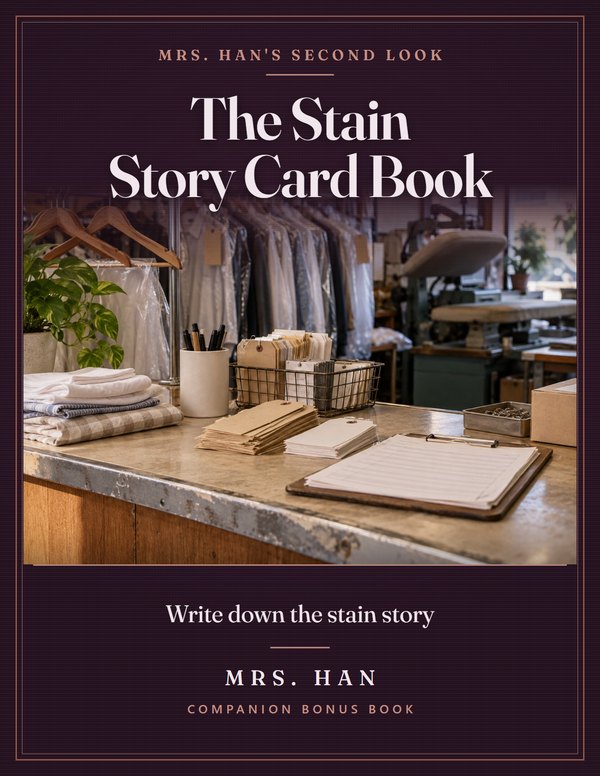
The Stain Story Card Book
Write down the stain story.
A large-print printable record for what spilled, when it happened, fabric and care-label details, photographs, and anything already attempted. 30 pages.
Estimated value $12Included with the $37 book
Bonus book 2 of 3
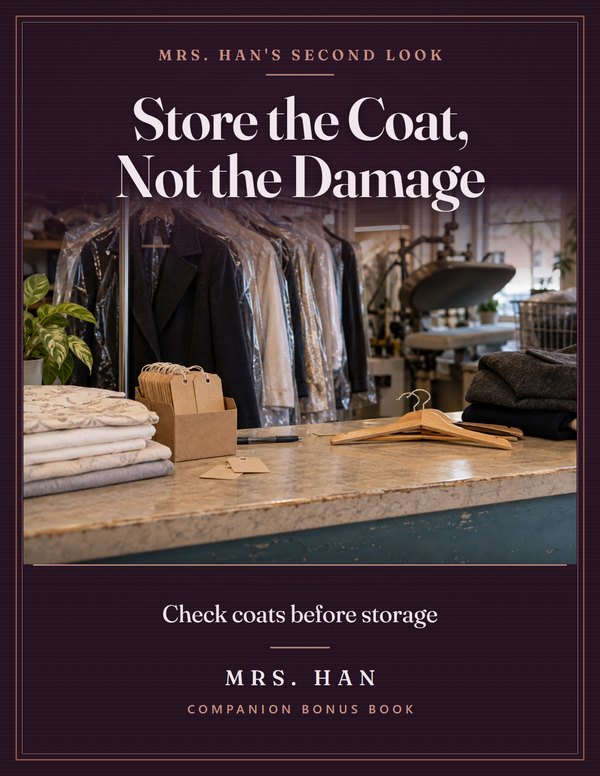
Store the Coat, Not the Damage
Check coats before storage.
A seasonal coat and occasion-wear inspection, storage, and cleaner-handoff mini-book. 33 pages.
Estimated value $11Included with the $37 book
Bonus book 3 of 3
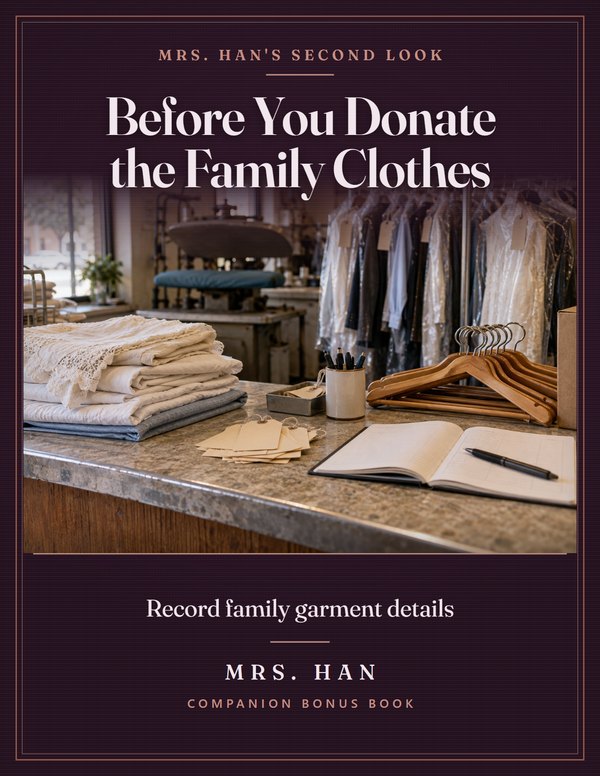
Before You Donate the Family Clothes
Record family garment details.
A keepsake garment and family-linen identification, story, condition, and care log. 33 pages.
Estimated value $10Included with the $37 book
Plus, at no extra charge: lifetime updates to the main book.
Individual values are estimates set by Mrs. Han, not previous selling prices. No physical books are shipped.
04 · The honest part
What you won’t find in this book.
✕Not in this book: A quick answer based on a fiber name alone.
I show you how to look at the label, structure, trim, and condition of the finished garment.
✕Not in this book: A claim that home washing is right for every washable-looking garment.
I show you how to pause when dye, shape, trim, or construction is uncertain.
✕Not in this book: A promise that every mark, odor, or old problem can be removed.
I show you how to document the condition and ask what is realistic before work is approved.
✕Not in this book: A reason to keep adding home treatments when a cleaner is the plan.
I show you how to stop, record what happened, and make the handoff clear.
Mrs. Han
Mrs. Han
05 · Who wrote it
From the counter and spotting board
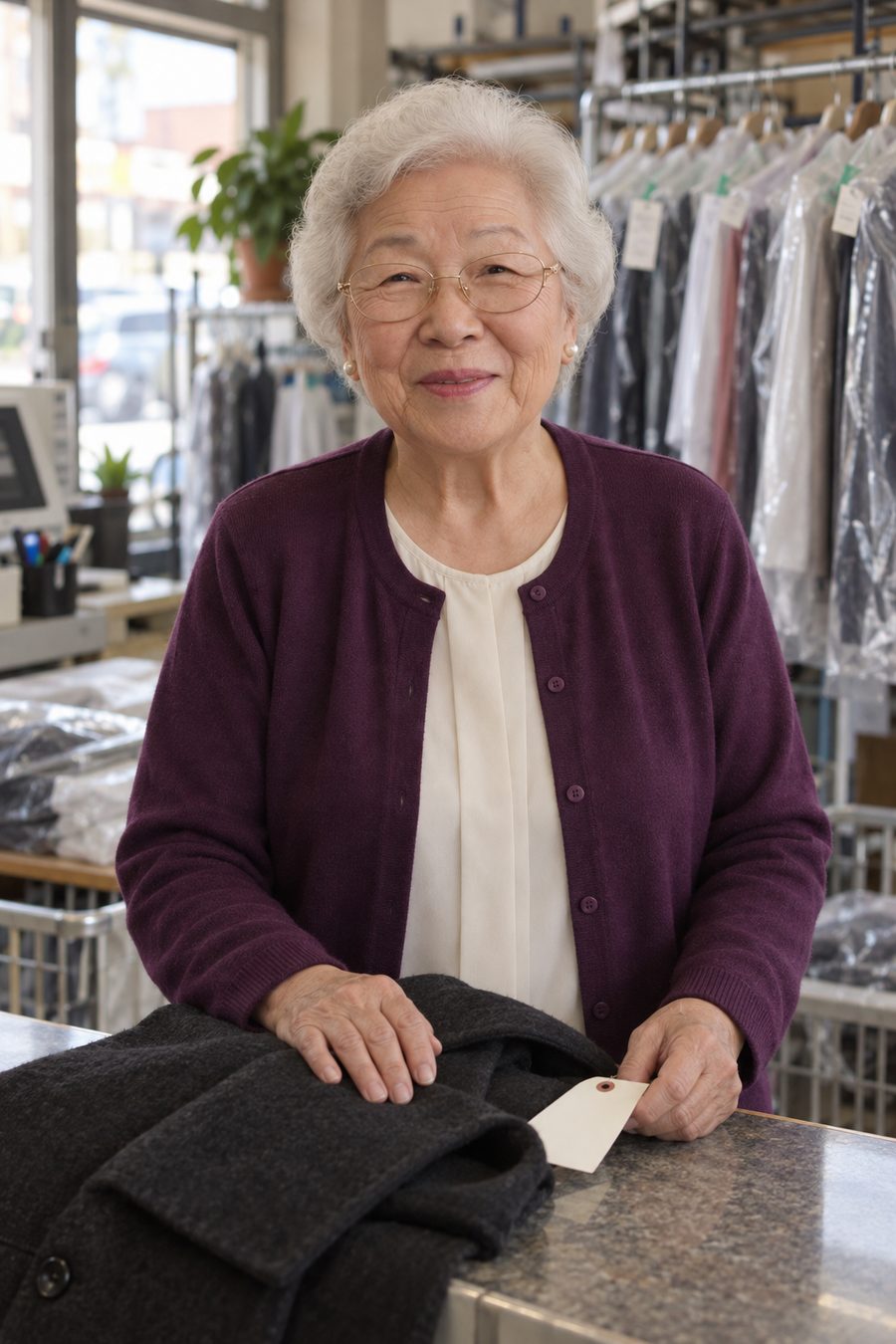
Mrs. Han is 73 and lives in Greensboro, North Carolina. She came to the United States from Korea as a young woman and spent 41 years at a neighborhood dry cleaner, working the customer counter and the spotting board before she retired.
For years she heard the part customers remembered after a garment came in: what happened, when it happened, what had already been tried, and whether the piece had been stored away first. She learned that a clear story and a careful first look can matter before anyone handles a good coat, dress, suit or family linen.
Her book is about giving good clothes a fair second look: inspection, simple notes, storage choices, and knowing what to tell a cleaner when you hand something over.
PDF and EPUB editions to download, read or print. No subscription. No shipping.
158 pages · 10 chapters · 3 bonus books
Make Your Good Clothes Last Years Longer
You receive the 158-page digital book, a 42-page workbook, and three bonus PDF files. After payment, download the files and begin with one garment you value.
$37$47Launch price — ends October 28
The material gives you a calm place to begin when you need to make a care decision.
What you get for $37:
Individual values below are publisher estimates. Everything is included in your $37 purchase.
Make Your Good Clothes Last Years Longer
70 Garment-Care and Cleaner-Handoff Methods
$47
Bonus book 1The Stain Story Card Book
A large-print printable record for what spilled, when it happened, fabric and care-label details, photographs, and anything already attempted. 30 pages.
Est. value$12Included
Bonus book 2Store the Coat, Not the Damage
A seasonal coat and occasion-wear inspection, storage, and cleaner-handoff mini-book. 33 pages.
Est. value$11Included
Bonus book 3Before You Donate the Family Clothes
A keepsake garment and family-linen identification, story, condition, and care log. 33 pages.
Est. value$10Included
The printable field kit
42 printable pages: the worksheets and cards to use beside the book.
Included
Lifetime updates
Future revisions of this book at no extra charge.
$21
3 bonus books combined$33
Total estimated package value$101
You pay today$101$37
Secure one-time checkout. Your digital books are ready to download after confirmed payment.
Instant download · PDF + EPUB · print only the pages you need
Published by Mrs. Han
14days
The Read-It-First Guarantee. Read the whole book and try it for 14 days. If it is not worth what you paid, ask for your money back through Whop, where you paid, and every dollar comes back, no questions asked. Whatever you have already downloaded, bonus books included, stays yours. You should not have to judge a book by its sales page.
07 · Questions
Questions worth answering
What exactly do I receive?
You receive the 158-page digital book, a 42-page workbook, and three bonus PDF files. The files cover garment care, storage choices, documentation, and cleaner handoffs.
Can I print it?
The materials are digital PDF files. You can print the pages you want to keep near your closet or laundry area.
Is it for me?
This book is for readers after 60 who want independent methods for caring for good clothes and speaking clearly with a cleaner. It is especially useful when a garment has a label, lining, trim, a mark, an odor, or an unanswered question.
How do I start?
After payment, download the PDF files. Choose one garment you value and begin with its label, whole shape, and present condition.
What if it does not help me?
Ask for your money back through Whop within 14 days and every dollar comes back, no questions asked. That is the Read-It-First Guarantee: read the book first, then decide.
Do I need a subscription?
No. This is a digital PDF purchase with no subscription and no shipping.
Does the book tell me whether to use home care or a cleaner?
It shows you how to consider the care label, fiber, structure, trim, and condition before choosing a path. It also shows you how to prepare a clear record when professional cleaning is the plan.
Can I read it on a Kindle or e-reader?
Yes. The main book also comes as an EPUB file, which opens in Kindle (through Send to Kindle), Apple Books, Kobo and Google Play Books. The workbook and bonus books are PDFs, made to read on screen or print.
Give your good clothes a fair second look
Start with the garment, not a guess. Then use the methods that fit what you can see and what the garment asks of you.
$37 once · 14-day Read-It-First Guarantee · instant digital download